7 by Q4 2018. The ACA still earns a split choice from Americans in 2019, according to the American analytics and advisory business, Gallup. However, the ACA showed resistant gradually. We'll see what the brand-new Presidency (2021-2024) brings. The Bismarck and Beveridge models have had an enduring influence on the majority of European nations.
Considering that the application of the CMU (universal healthcare coverage), the French system, for example, has actually guaranteed that everybody has access to healthcare. Employment no longer determines access to health care, as is theoretically the case. However funding techniques have not been brought into question. In all countries affected by the English model, moneying mainly originates from taxes, while in other countries, it is mainly drawn from social contributions.
These distinctions in financing are connected to how the system is arranged: in general,, on the other hand,. So, how is health care funded in Europe? Each nation has its own system. There is no single European healthcare system as such. Social security does not fall under the jurisdiction of the European Commission.
It gives the holder the right to gain access to health care during a short-lived stay in another EU country, the UK, Norway, Iceland, Liechtenstein, or Switzerland.). In other words: Health care is a nationwide topic just. More than 1,500 billion is spent in the European Union (consisting of the UK) on health care. Confronted with the sharp increase in healthcare expenses, all European countries have tried to check costs while enhancing the performance of universal health care systems in location.
How To Get Health Care - The Facts
The circumstance was the same in 2019. Simply put, any major health-care bill means adjusting a sixth of the American economy. Let's see the 3 major difficulties when considering healthcare system management. The very first challenge is to preserve or improve residents' health by (medical or otherwise) of the public.
There are several priorities to handle the resources readily available, such as: enhancing the system by rendering procedures paperless, freeing patients up from the numerous administrative procedures linked to the management of healthcare. If the goal is to, the battle versus mistake, scams, and abuse must, naturally, need to be included.
This is a problem of some magnitude. In the, the total variety of deaths due to iatrogenesis in 2001 reached 738,936. The number of deaths brought on by heart disease was 699,697, and 553,251 deaths were caused by cancer (source: American Iatrogenic Association 2002). In France, in 2004, the number of deaths arising from iatrogenesis was greater than 10,000, and 3.
A monetary evaluation of this problem is difficult to perform. No realistic research study relating to the quantities involved was to be found. But the reasons for the phenomenon are understood. such as physicians doing not have information or training, clients requiring information or education, prescription mistakes (unsuitable medication: dose, protocol, treatment), over-prescription or insufficient prescription, a lack of information on the client (allergic reactions, signs not all considered, several pathologies), an under-estimation of drug interactions and self-medication.
The Definitive Guide to With Respect To A Worker's Health-care Coverage
Much better information systems might play a part in cutting this figure. This decrease is one of the goals of the Personal Medical File. is also a significant difficulty. Simply think of it., in between $75 billion and $250 billion, according to the FBI, are lost to fraud. In 2019, $3,800 billion or $3.
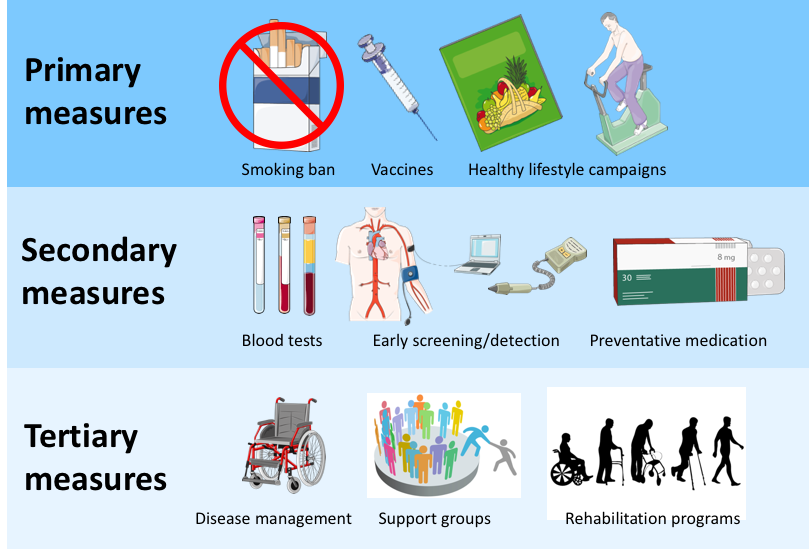
, around 6% to 10% of costs in the healthcare sector is lost to fraud, according to the European Healthcare Scams and Corruption Network (EHFCN)., which invested 1,482 billion on health care in 2016 (10% of GDP), this means over 140 billion were lost because year alone. Feedback from interviewees in a study we performed suggested that the higher EHFCN scams figure (10%) is closer to the real cost of this issue.
These aspects can frequently cause extreme enhancements. In, with the universal healthcare SESAM Vitale program, for example: Clients are now repaid after 5 days, rather than after 2-3 weeks (due to documentation). 1. 257 billion electronic claim types were utilized in 2019; 93% of all claim forms with administrative efficiency and treatment expenses were divided by 6 for the claims in concern.
is a card with an embedded microcontroller that certifies entitlement to health insurance. There's more. The introduction of electronic claim types and the cut in the number of statement sheets suggests that 3,6 billion A4 sheets of paper are conserved annually. They are no longer produced, printed, dispersed, stored, or ruined.
Getting The How Does Electronic Health Records Improve Patient Care To Work
This record, for that reason, cuts mistakes and hesitancy in emergency situations and enhances the quality of services provided. It also improves cooperation in between all health care workers, pooling all offered information on patients into a central file. Smart EMRs limit the variety of medical interventions and make sure that the care offered clients is consistent.
The term describes any situation where info is passed in between healthcare professionals digitally (basic specialists or specialists, care employees, pharmacists, etc.). This information could be messages, letters, signals, results, images, administrative information, complete files, and so on, for medical diagnosis, therapy, or tracking - what countries have universal health care. In terms of administration, the outcomes acquired are excellent.
for clients and healthcare experts and must be implemented in the healthcare sector. Yet this is not the case in numerous nations. Executing health care cards with and would allow the creation of personalized, online services, a quintessentially patient-centric method, yet these efforts are still in the advancement stages. The ability to confirm advantages, expiration dates, repeated, and several usages is, on the entire, underused.
Yet cards have an essential role in developing constant databases, automatic reading of information, and momentary or permanent private regional storage of additional information such as blood groups, allergic reactions, persistent diseases, and associated treatments. Electronic services that have already been implemented in European nations for universal health care schemes, and in the remainder of the worldwith recognition systems, electronic signatures, and electronic authentication - plainly program: The crucial elements (microchip cards, public key infrastructure, authentication, etc - what does cms stand for in health care.) of a modern-day health care system can rely on robust technology to rise to the obstacles provided by scams, abuse, and mistakes.
What Does A Health Care Professional Is Caring For A Patient Who Is About To Begin Iron Dextran Do?
, consisting of the German Gesundheitskarte (photo above) or Chifa card, an eHealthcare solution in Algeria. Our care projects offers us with an exceptional overview of the innovation included, its applications, and the quality of info systems, as well as the social context of its use (how many health care workers have died from covid). Additionally, our experts have actually provided, mainly to combat scams and cut the number of mistakes.
The OECD, with its core mission to promote policies to enhance the financial and social wellness of individuals around the world, brings much appropriate https://finnkctv860.skyrock.com/3339835474-Getting-The-Who-Is-Eligible-For-Care-Within-The-Veterans-Health.html experience supporting nations to accomplish and sustain universal health protection (UHC). The OECD displays and examines key elements of universal health protection, and evaluates the future sustainability of universal health systems.
The OECD's contribution to helping countries attain and sustain universal health protection. Universal Health Coverage is about everybody having access to excellent quality health services without suffering monetary challenge. Although the majority of OECD countries provide all their residents cost effective access to a comprehensive bundle of health services, they face difficulties in sustaining and improving such universal systems.